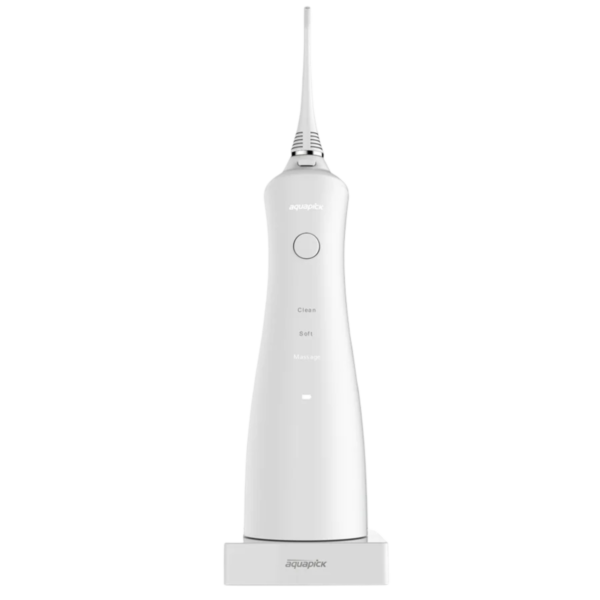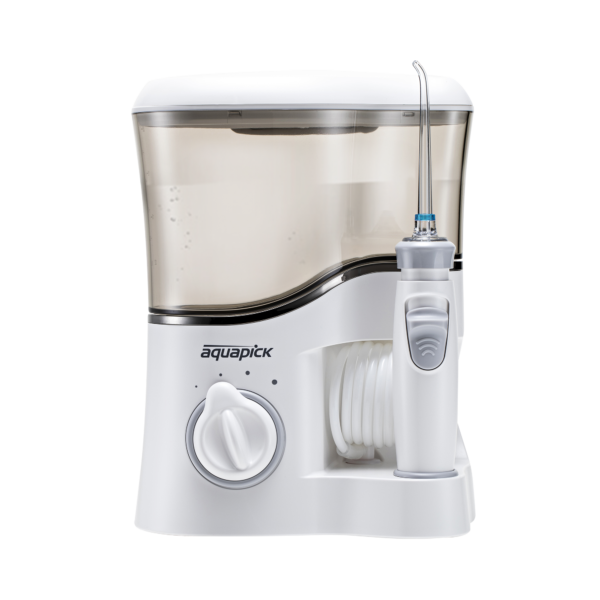
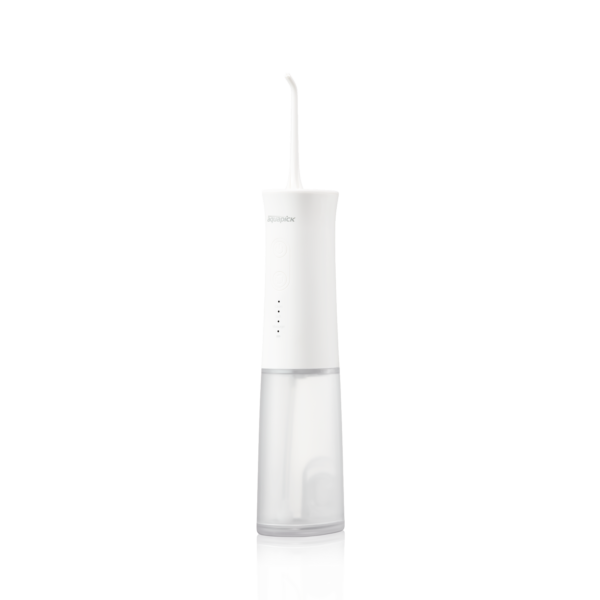
Aquapick – the new standard in my dental care!
- Discover perfect tooth cleanliness without much effort
- Clean the deepest areas that a toothbrush cannot reach
- Forget complicated cleaning with floss and interdental brushes
- Trust effectiveness backed by scientific research
99.9%
of dental plaque
that a toothbrush
cannot reach
52%
more plaque
than an electric
toothbrush
56%
than interdental
brushes in reducing
gum bleeding
2.5x
cleans better
around implants
than dental floss
How to choose an oral irrigator?
I have been visiting dentists for the last 20 years, but I could never solve my bleeding gums problem. After I started using Aquapick, the gum bleeding decreased significantly after just 2 weeks.
I wear braces, and getting the food out used to take almost half an hour, and I still felt like something was stuck. This irrigator rinses everything out in less than a minute. It is the best purchase I have made this year.
My sensitive gums used to bleed at the slightest touch. I was afraid the irrigator would hurt them even more. It turns out the opposite – after I started using the irrigator, the bleeding disappeared completely! Now I use it every day.
I had deep gum pockets in which plaque constantly built up and painful inflammations flared up. After I started using this device, the water stream cleans even the deepest places perfectly. The inflammations have finally stopped.
I struggled with constant bad breath even though I brushed my teeth conscientiously. Only after I started using Aquapick did I realize how much food debris is left between the teeth. The problem disappeared after just a few days of use.
My teeth are very crowded, so when I flossed, the floss constantly got stuck and tore. The irrigator became a real lifesaver – with the water stream I can easily clean between my teeth, which even surprised my dental hygienist.
I have a bridge on implants, under which food debris constantly got stuck. No interdental brushes helped me clean fully. This irrigator rinses everything out perfectly in a few seconds. I can't imagine how I managed without it before.
I have been afraid of dentists since childhood, so I don't like visiting them. After I started using Aquapick I understood what it really means to clean your teeth. Now I only go to the dentist every few years, and the last time she said my dental condition was exemplary. That is the biggest compliment for me.
Before that I had an irrigator from a supermarket, but it splashed water more than it cleaned, and my gum bleeding never stopped. After buying Aquapick I felt the difference immediately – the stream pulsation is like night and day, and my gum bleeding started to decrease after just a week.
My daughter got braces, and cleaning them with floss caused a new drama every evening. When Aquapick was recommended to us, cleaning became a kind of attraction for her. My daughter wants to use it herself, and the dentist praised that there is no plaque at all around the braces.
DUK
Yes, it is one of the most effective ways to care for gum pockets, orthodontic appliances and implants. The pulsating water stream easily rinses plaque and food debris from under the archwires of braces, from gum pockets and from dental implant prostheses – places that are practically inaccessible to a toothbrush. Regular use of an oral irrigator not only makes oral care easier, but also protects against gum diseases (gingivitis, periodontitis) and inflammation around implants (peri-implant mucositis, peri-implantitis).
A toothbrush and an oral irrigator are two different, complementary dental care tools designed to clean different tooth surfaces. The brush removes plaque from the chewing and side surfaces of the teeth, but the bristles cannot reach as much as 40% of the harder-to-reach tooth area between the teeth and under the gums. An oral irrigator is designed to clean these problem areas. Therefore, by using Aquapick after brushing, you will clean the tooth surfaces the toothbrush cannot reach and thus ensure complete oral hygiene.
Although dental floss cleans the contact points between teeth well, it physically cannot reach gum pockets or clean the areas around dental implants or braces as effectively as the pulsating water stream of an irrigator does. Clinical studies show that an oral irrigator is up to 50% more effective than dental floss in improving gum health. Therefore, for most people the oral irrigator becomes the main tool for cleaning between the teeth. If the contact points between your teeth are very tight, depending on your individual dental condition, oral care specialists may recommend using dental floss as an additional tool after brushing and using the oral irrigator.
The water stream, even at the highest setting, is too soft to damage healthy tissue, let alone tooth enamel, which is the hardest tissue in the human body. Unlike aggressive cleaning with a hard brush, an oral irrigator is the safest way to clean sensitive areas of the teeth and gums. The only exception is cleaning around wounds in the oral cavity (healing wounds after tooth extraction, implantation, mouth ulcers, etc.), which are recommended to be protected from a more intense water stream during the early 4–6 week healing period.
Water has no direct whitening effect, but by removing coffee, tea or wine deposits from between the teeth, it prevents the tooth enamel from darkening. Your smile looks visually brighter and cleaner, and most importantly – you will start to feel a greater sense of cleanliness than from brushing with a toothbrush and toothpaste alone.